

Company Culture
Signs of a Toxic Company Culture
The hardest thing about a toxic culture is that the people inside it are the last to see it, because toxicity creeps in one tolerated behavior at a time until it becomes the water you swim in. The signs are knowable: fear to speak up, best people leaving vaguely, gossip replacing honesty, credit up and blame down, badge-of-honor burnout, and a gap between stated and lived values. Toxic cultures rarely heal alone, and when the rot is anchored in a specific unresolved conflict, a neutral third party can surface what the culture made unspeakable. Nothing here is legal advice.
A toxic culture rarely announces itself. It shows up in small signals, the good people leaving quietly and the worst behavior going unaddressed.
The slow poison you stop smelling
The hardest thing about a toxic culture is that the people inside it are the last to see it. Toxicity creeps in gradually, one tolerated behavior at a time, until the abnormal becomes the water you swim in and you no longer notice the smell. New hires feel it in their first week and can’t name it. Veterans stopped feeling it years ago. And leadership, insulated at the top, often has no idea their culture has quietly rotted until the good people are already gone. A toxic culture rarely announces itself. You’ve to know the signs to catch it before it catches you.
And catching it matters more than almost anything else a leader does, because culture is the soil everything else grows in. You can have a brilliant strategy and a great product, and a toxic culture will strangle both, slowly, from underneath, where the quarterly numbers can’t see it happening yet.
The signs worth knowing
Fear is the master symptom: people are afraid to speak up, admit mistakes, or disagree, so the truth stops traveling upward and problems hide until they explode. Your best people leave, and the exit interviews are suspiciously vague, because no one wants to burn a bridge by naming what is really wrong. Gossip and factions replace honest conversation, so the real discussions happen in side channels instead of in the open. Credit flows up and blame flows down, teaching everyone to protect themselves rather than take risks. Burnout is worn as a badge, and people compete over who is most exhausted. And the stated values and the lived reality have nothing to do with each other, which everyone can see and nobody will say.
It isn’t a prediction of any result.
The people inside a toxic culture are the last to see it. It becomes the water you swim in.
From spotting it to fixing it
Recognizing the signs is the start, but toxic cultures rarely heal on their own, because the same fear that created them prevents anyone from safely naming them. Very often the rot traces to a specific source, a toxic leader, a festering conflict between key people, a breach that taught the whole organization that honesty is dangerous, and until that root is addressed, surface fixes just paper over it. When the toxicity is anchored in a specific unresolved conflict, a neutral third party can surface and resolve what the culture itself has made unspeakable. For the deeper picture, see what company culture actually is and how to fix a toxic team culture. The first conversation is private and carries no obligation. Nothing here is legal advice.

Culture is the soil everything else grows in.
Common questions
What are the signs of a toxic company culture?
Fear is the master symptom: people are afraid to speak up, admit mistakes, or disagree, so truth stops traveling upward. Others include your best people leaving with suspiciously vague exit interviews, gossip and factions replacing honest conversation, credit flowing up while blame flows down, burnout worn as a badge, and a gap between stated values and lived reality that everyone sees and no one will say. A toxic culture rarely announces itself, so you’ve to know the signs to catch it. Nothing here is legal advice.
Why is toxic culture so hard to see from inside?
Because toxicity creeps in gradually, one tolerated behavior at a time, until the abnormal becomes the water you swim in and you stop noticing the smell. New hires feel it in week one but can’t name it, veterans stopped feeling it years ago, and leadership, insulated at the top, often has no idea until the good people are already gone. That slow normalization is exactly why knowing the explicit signs matters so much.
Why does fear indicate a toxic culture?
Because fear is the master symptom from which most others flow. When people are afraid to speak up, admit mistakes, or disagree, the truth stops traveling upward, problems stay hidden until they explode, and honesty migrates to gossip and side channels. A culture running on fear can’t catch its own failures or keep its best people, who leave for places where candor is safe. Measuring how safe it feels to tell the truth is one of the fastest reads on cultural health.
Can a toxic culture fix itself once you spot the signs?
Rarely, because the same fear that created it prevents anyone from safely naming it, and the rot often traces to a specific source, a toxic leader, a festering conflict, or a breach that taught everyone honesty is dangerous. Until that root is addressed, surface fixes just paper over it. When the toxicity is anchored in a specific unresolved conflict, a neutral third party can surface and resolve what the culture has made unspeakable. Nothing here is legal advice.
You can feel a place that has gone toxic long before anyone names it, because the silence and the turnover tell the truth the survey will not. Reading the signs early is the difference between a fixable problem and an exodus.
About the Dyadic Mediation Team
Dyadic Mediation is led by two neutral mediators working the same table, the legal mind and the human mind. Here’s who you’d be sitting with.

Fred Smith
Neutral Mediator · Communications Strategist
Fred’s a communications strategist and business operator who’s spent decades in high-stakes rooms where words carry as much weight as the numbers, working at the corporate level of Hyundai Capital, Kia Motors America, the Volkswagen Group, and Audi of America. He’s a United States Marine Corps combat veteran and a recipient of the Meritorious Service Medal. At the table he’s the human mind, the neutral who reads the people and the pressure.
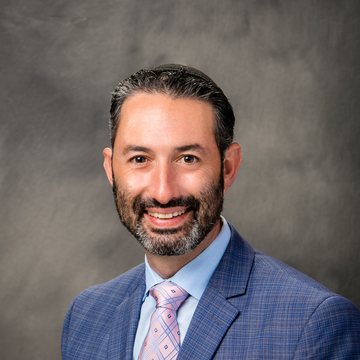
Warren Morten
Neutral Mediator · Founder, The Morten Law Group
Warren’s a California attorney and the founder of The Morten Law Group in Irvine, with a career spent in the rooms where business is really decided: corporate and partnership matters, estate planning, health care, and mergers and acquisitions. At the table he’s the legal mind, the neutral who reads the law and the leverage. He serves as a neutral mediator and doesn’t represent either side.
Toxic Culture Signs in Orange County
In Orange County’s interconnected business world, from Newport Beach to Irvine, a toxic culture is the water you stop smelling until the good people are gone. Dyadic Mediation helps when the rot is anchored in a specific unresolved conflict the culture has made unspeakable. We serve Costa Mesa, Santa Ana, and the full county, with reach from Los Angeles to San Diego.
In Confidence
If a dispute is running your life right now, you don’t have to decide anything today except to have one private conversation. It carries no obligation. Dyadic Mediation serves Orange County, from Newport Beach to Irvine to San Juan Capistrano, and the wider region from Los Angeles to San Diego.
Dyadic Mediation · 18300 Von Karman Ave, Suite 660, Irvine, CA 92612 · (949) 579-2760
Serving Orange County, with reach into Los Angeles County and San Diego County. The information on this page is general information about mediation and workplace issues, not legal advice, and reading it doesn’t create a mediator-client relationship. Mediation is a private, voluntary process and isn’t a substitute for advice from your own attorney. © 2026 Dyadic Mediation. All rights reserved.
Leave a Reply