

Trust & Safety
Building Trust in Hybrid Teams
You build trust in a hybrid team by refusing to let the office become a privilege: default to the remote experience, distribute opportunity on purpose, put information where everyone can reach it, and name proximity bias out loud. Hybrid teams live in a split world, some sharing hallways while others watch through a screen, and that fault line is where trust quietly cracks, because people tend to favor the colleagues they physically see. When the split has hardened into resentment, mediation gives the office group and the remote group one neutral room to hear each other. Nothing here is legal advice.
Your office crew gets the hallway updates and the last-minute invites, and your remote people find out in the group chat a day later. Nobody planned it that way, which is exactly why nobody’s fixing it.
The hardest team to hold together is the half-and-half one
Fully remote teams at least share one reality: everyone is on the same footing, equally distant. Fully in-office teams share another.
Hybrid teams live in the hardest place of all, a split world where some people share hallways and coffee while others watch through a screen, and the fault line between those two experiences is where trust quietly cracks. Hybrid isn’t the best of both worlds.
Done carelessly, it’s a two-tier system where proximity decides who belongs, and the people on the wrong tier feel it long before anyone names it.
The core problem has a name: proximity bias, the deep human tendency to favor, trust, and remember the people we physically see.
In a hybrid team it runs constantly in the background, handing the in-office group a steady drip of advantage, visibility, spontaneous input, face time with decision-makers, while the remote half slowly becomes names on a screen. Nobody decides to do this. It just happens, which is exactly what makes it dangerous.
At Dyadic we hold that fair has to look fair, not just be fair. A hybrid team can have an even-handed policy on paper and still feel rigged to the people on the screen, because they can’t see the hallway where decisions get warmed up. Trust follows what people can see.
When the remote half can watch how opportunities get handed out and decisions get made, they’re far more likely to believe the policy means what it says.
Building one team out of two groups
Default to the remote experience, designing meetings and communication for the person on the screen rather than letting them be a spectator to an in-room conversation, because what is convenient for the office is usually invisible to the remote.
Distribute opportunity deliberately, making sure the interesting projects, the visibility, and the face time don’t simply flow to whoever is physically closest. Make information equal, putting decisions and context in writing everyone can reach instead of letting it live in hallway conversations the remote half never hears.
And name the bias openly, because a team that knows proximity bias exists can catch it, while a team that pretends it doesn’t just lets it run. Trust in a hybrid team is built by refusing to let the room become a privilege.
Hybrid isn’t the best of both worlds. Done carelessly, it’s a two-tier system where proximity decides who belongs.
When the two tiers have already split into conflict
Left unaddressed, hybrid’s fault line hardens from quiet inequity into open resentment: an in-office group that feels the remote people are coasting, a remote group certain they’re being overlooked and undervalued, two camps inside one team that have stopped assuming good faith about each other.
At that point, better meeting design doesn’t reach the resentment, because the problem has become a relationship, not a process. When a hybrid team has split into us and them, mediation brings both tiers into the same conversation on equal footing, heard by people who sit in neither camp.
Why the leader can’t referee the two tiers
A two-tier team doesn’t start as a dispute. It starts as a missed invite, a decision the remote half learned about second hand, a review that praised “presence”. Each tier writes a story to explain the gap, and the stories are about people, not policies.
By the time the resentment surfaces, you’re rarely seen as neutral. If you work from the office, the remote group reads you as part of the hallway crowd; if you’re remote, the office group assumes you’ve picked a side. Either way, your ruling lands as proof.
That’s a two-sided dispute, and mediation fits it. Each tier describes what the split has felt like from its side, and two mediators listen at once, which matters when two groups describe the same week in completely different terms.
What’s said stays confidential within the limits of California law. The mediators represent nobody and don’t decide who’s been treated unfairly. The people in the room decide what changes, from how information moves to how opportunity gets shared.
Listen for the language. When people start saying “the office people” or “the remote people” instead of names, the team has already split, and that’s the time to bring both halves into one room.
For the deeper picture, see trust and psychological safety and conflict between remote and in-office staff. The first conversation is private and carries no obligation. Nothing here is legal advice.

Trust in a hybrid team is built by refusing to let the room become a privilege.
Common questions
How do you build trust in a hybrid team?
Default to the remote experience, designing meetings and communication for the person on the screen rather than letting them spectate an in-room conversation; distribute opportunity deliberately so visibility and face time don’t flow only to whoever is physically closest; make information equal by putting decisions and context in writing everyone can reach; and name proximity bias openly, because a team that knows it exists can catch it. Trust in a hybrid team is built by refusing to let the room become a privilege. Nothing here is legal advice.
Why are hybrid teams harder than fully remote or in-office?
Because fully remote and fully in-office teams at least share one reality and one footing, while hybrid teams live in a split world, some sharing hallways and coffee, others watching through a screen, and the fault line between those two experiences is where trust quietly cracks. Done carelessly, hybrid becomes a two-tier system where proximity decides who belongs, and the people on the wrong tier feel it long before anyone names it. That structural split is what makes hybrid uniquely hard.
What is proximity bias and why does it matter in hybrid work?
Proximity bias is the deep human tendency to favor, trust, and remember the people we physically see. In a hybrid team it runs constantly in the background, handing the in-office group a steady drip of advantage, visibility, spontaneous input, face time with decision-makers, while the remote half slowly becomes names on a screen. Nobody decides to do it, which is what makes it dangerous, and naming it openly is the first step to catching and counteracting it. Nothing here is legal advice.
What if the hybrid split has already become resentment?
Then better meeting design won’t reach it, because the quiet inequity has hardened into a relationship problem: an in-office group that thinks the remote people coast, a remote group certain they’re overlooked, two camps that have stopped assuming good faith. When a hybrid team has fractured into us-and-them, a neutral third party can bring both sides together to be heard and start rebuilding one team out of the two, which process fixes alone can’t do. Nothing here is legal advice.
Every week the two tiers run on different information, each side writes a little more of its own story about the other. Those stories are easier to rewrite before they harden into what people believe about their coworkers, so make the fairness visible now, while both halves still assume good faith.
About the Dyadic Mediation Team
Dyadic Mediation is led by two neutral mediators working the same table, the legal mind and the human mind. Here’s who you’d be sitting with.
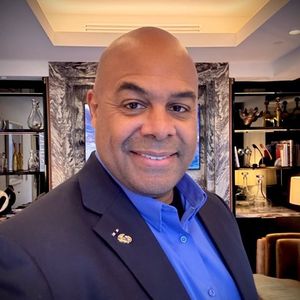
Fred Smith
Neutral Mediator · Communications Strategist
Fred’s a communications strategist and business operator who’s spent his career in high-stakes rooms where words carry as much weight as the numbers, working at Hyundai Capital and on corporate programs for Kia Motors America, Volkswagen, and Audi. He’s a former Marine Corps Sergeant and Combat Correspondent, a job built on getting people to tell you what really happened, with Marine Corps training in counseling and leadership and the Meritorious Service Medal. At the table he’s the human mind, the neutral who reads the people and the pressure.
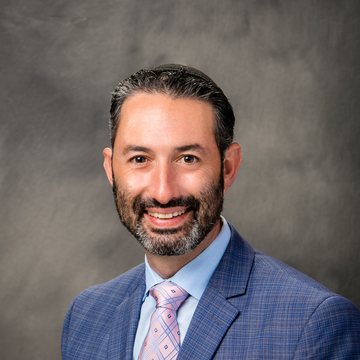
Warren Morten
Neutral Mediator · Founder, The Morten Law Group
Warren’s been a California attorney since 2006, selected to Super Lawyers for Business & Corporate law (2024 to 2027), and he founded The Morten Law Group in Irvine, with a career spent in the rooms where business is really decided: corporate and partnership matters, estate planning, health care, and mergers and acquisitions. At the table he’s the legal mind, the neutral who reads the law and the leverage. He serves as a neutral mediator and doesn’t represent either side.
Trust in Hybrid Orange County Teams
Plenty of Orange County companies run hybrid, with an Irvine or Costa Mesa office and remote staff across the county, and proximity quietly decides who belongs. Dyadic Mediation helps when the two-tier split has hardened into us-and-them that better meetings cannot fix. We serve Newport Beach, Santa Ana, and the full county, with reach from Los Angeles to San Diego.
In Confidence
The first call is free and private, and it commits you to nothing. You don’t need a lawsuit on file, and you don’t need the other side on board yet.
Dyadic Mediation meets Orange County teams and their leaders privately in Irvine, from Santa Ana and Tustin to Laguna Niguel, and serves Southern California from Los Angeles to San Diego.
Dyadic Mediation · 18300 Von Karman Ave, Suite 660, Irvine, CA 92612 · (949) 579-2760
Serving Orange County, with reach into Los Angeles County and San Diego County. The information on this page is general information about mediation and workplace issues, not legal advice, and reading it doesn’t create a mediator-client relationship. Mediation is a private, voluntary process and isn’t a substitute for advice from your own attorney. © 2026 Dyadic Mediation. All rights reserved.
Comments
2 responses to “Building Trust in Hybrid and Remote Teams”
[…] Building trust in hybrid teams […]
[…] Building trust in hybrid teams […]