

Workplace Conflict
Personality Clashes at Work
You fix a personality clash at work by changing how two people interact, not who they are: build understanding of each other’s style and set a few shared rules for decisions, pace, and feedback. These clashes are maddening because there’s no single issue to fix, and they sting because the friction feels like a judgment of who you are, so each becomes the villain in the other’s story. Mediation often helps, because the two are too frustrated to bridge it alone. Nothing here is legal advice.
Two of your best people can’t be in a meeting together without it turning icy. Everyone tiptoes around them, and you’ve started scheduling around the problem instead of dealing with it.
When it isn’t the work, it’s the wiring
Some workplace conflicts are about a real, solvable issue. Personality clashes aren’t, and that’s what makes them so maddening. There’s no single decision to fix, no policy to clarify.
Two people just seem to rub each other wrong in a hundred small ways, the fast talker and the careful thinker, the big-picture dreamer and the detail hawk, the one who processes out loud and the one who needs silence to think. Nothing is technically broken, and yet working together feels like sandpaper.
Leaders often throw up their hands at these, calling them unfixable and just hoping the two can avoid each other. But personality clashes are often more workable than leaders expect, once you stop trying to change the people and start changing how they interact.
One caution from Dyadic’s view of conflict: make sure it really is personality. Conflict comes in four kinds. Task, about what you’re doing.
Process, about how. Relationship, the personal friction. And values, the deep end, where meeting in the middle isn’t really possible.
From the outside they look alike, so leaders often label a structural problem two people who just don’t get along, then prescribe the wrong fix. Get the diagnosis right first.
Why they feel so personal
A personality clash stings because it feels like a judgment of who you are, not what you did. When someone’s natural style grates on you, the easy story is that they’re difficult, careless, or rude, when really they’re just wired differently and operating from a different set of defaults.
Each person becomes the villain in the other’s story, not because anyone is malicious, but because neither has the translation key for the other’s wiring. The friction is real. The villain is imaginary.
The friction is real. The villain is imaginary.
What actually works
You don’t resolve a personality clash by asking people to become someone else. You resolve it by building understanding and a few shared rules of engagement. In mediation, each person gets a real chance to see the other’s style as a difference rather than a defect, which can take a lot of the heat out of it.
Then you set simple working agreements, how decisions get made between them, how fast is fast enough, how each prefers to receive feedback, so the differences stop colliding by accident. A neutral mediator helps because the two are too deep in their own frustration to build that bridge alone.
For the broader approach, see defusing workplace conflict and handling team conflict as a manager. The first conversation is private and carries no obligation. Nothing here is legal advice.

Stop trying to change the people. Change how they interact.
Common questions
How do you resolve a personality clash at work?
Not by asking people to become someone else, but by building understanding and a few shared rules of engagement. In mediation, each person comes to see the other’s style as a difference rather than a defect, which can take a lot of the heat out of it, then you set simple working agreements about decisions, pace, and feedback so the differences stop colliding by accident. A neutral mediator helps because the two are too deep in their own frustration to build that bridge alone. Nothing here is legal advice.
Are personality clashes actually fixable?
Often, yes, and they tend to be more workable than leaders expect, despite so often being written off as unfixable. The trick is to stop trying to change the people and start changing how they interact. Once each person sees the other as wired differently rather than difficult, and a few working agreements are in place, the friction that felt permanent often eases. The clash is about mismatched defaults, not a flaw in either person.
Why do personality clashes feel so personal?
Because the friction feels like a judgment of who you are, not what you did. When someone’s natural style grates, the easy story is that they’re difficult, careless, or rude, when really they operate from different defaults. Each becomes the villain in the other’s story, not from malice but because neither has the translation key for the other’s wiring. The friction is real, but the villain is imaginary, which is why understanding can reach what willpower can’t.
Should a manager just keep clashing employees apart?
Separation is a patch, not a fix, and it’s often impossible when the roles require collaboration. Avoidance also leaves the underlying misunderstanding intact, so the moment the two must work together again, the friction returns. Building mutual understanding and clear working agreements gives the pair a far better chance than keeping people in separate corners, and it turns a liability into a workable, even complementary, pairing. Nothing here is legal advice.
Every month two clashing people stay in separate corners, the team learns to pick a side and route work around one of them. That pattern is harder to undo than the clash itself. The conversation is easier now, while both of them still want to be good at the job together.
About the Dyadic Mediation Team
Dyadic Mediation is led by two neutral mediators working the same table, the legal mind and the human mind. Here’s who you’d be sitting with.
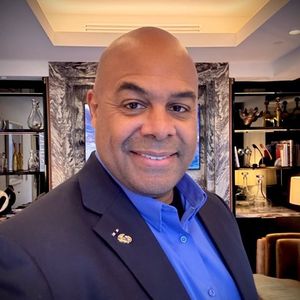
Fred Smith
Neutral Mediator · Communications Strategist
Fred’s a communications strategist and business operator who’s spent his career in high-stakes rooms where words carry as much weight as the numbers, working at Hyundai Capital and on corporate programs for Kia Motors America, Volkswagen, and Audi. He’s a former Marine Corps Sergeant and Combat Correspondent, a job built on getting people to tell you what really happened, with Marine Corps training in counseling and leadership and the Meritorious Service Medal. At the table he’s the human mind, the neutral who reads the people and the pressure.

Warren Morten
Neutral Mediator · Founder, The Morten Law Group
Warren’s been a California attorney since 2006, selected to Super Lawyers for Business & Corporate law (2024 to 2027), and he founded The Morten Law Group in Irvine, with a career spent in the rooms where business is really decided: corporate and partnership matters, estate planning, health care, and mergers and acquisitions. At the table he’s the legal mind, the neutral who reads the law and the leverage. He serves as a neutral mediator and doesn’t represent either side.
Personality Clashes in Orange County Workplaces
In Orange County’s fast, high-performing firms from Newport Beach to Irvine, two talented people who simply grate on each other can quietly drag a whole team, and the friction is real even when the villain is imaginary. Dyadic Mediation helps local employers turn a stubborn personality clash into a workable arrangement built on understanding, not willpower. We serve the full county and the wider region from Los Angeles to San Diego.
In Confidence
The first call is free and private, and it commits you to nothing. You don’t need a lawsuit on file, and you don’t need the other side on board yet.
From Tustin to Newport Beach to Mission Viejo, Dyadic Mediation works with Orange County organizations on workplace conflict, privately, and serves the wider region from Los Angeles to San Diego.
Dyadic Mediation · 18300 Von Karman Ave, Suite 660, Irvine, CA 92612 · (949) 579-2760
Serving Orange County, with reach into Los Angeles County and San Diego County. The information on this page is general information about mediation and workplace issues, not legal advice, and reading it doesn’t create a mediator-client relationship. Mediation is a private, voluntary process and isn’t a substitute for advice from your own attorney. © 2026 Dyadic Mediation. All rights reserved.