A clear path through the uncertainty.
If you’ve never been through mediation, the unknown is its own kind of stress. So here’s exactly what happens, from the first private call to the signed agreement, with no surprises. And throughout, two mediators guide you, for the investment of one.
You relax the moment you know what happens next. That is not a trick, it is how a fair process is supposed to feel, step by visible step.
The dispute is rarely the thing that’s breaking you.
Ask anyone in the middle of one. The argument itself, the money, the clause, the broken promise, that part they can usually explain in a single sentence.
What they can’t explain is why it’s followed them home. Why they’re awake at three in the morning rehearsing a conversation that already happened.
Why a disagreement about a business has started to feel like a verdict on their judgment, their character, their future. That’s the part nobody warned them about.
A dispute doesn’t stay in the lane you file it in. It leaks.
It takes the one thing you were fighting over and quietly attaches it to everything else you care about.
Litigation makes that worse by design, not by accident. The system is built to be adversarial, which means it rewards positioning over understanding and turns two reasonable people into opponents who can’t speak to each other anymore.
Months pass. The file grows.
And somewhere in there the actual human problem, the one you could describe in a sentence, disappears underneath the procedure. Here’s what it’s really costing you while that happens.
Your time
Civil matters routinely take a year or more to reach trial, and often longer. That’s a year of your attention you don’t get back, spent on a calendar you don’t control.
Your money
Every motion, every filing, every hour is billable. The irony is familiar to anyone who’s lived it.
The fight over money becomes the most expensive thing in the room.
Your privacy
A courtroom is public record. The details of your business, your family, and your finances can become permanent, searchable, and available to anyone who cares to look.
Your relationships
Most disputes are between people who’ll have to see each other again. Partners.
Family. Colleagues.
Litigation is built to end the relationship, even when you both needed it to survive.
Your control
The moment a judge or jury decides, the outcome leaves your hands completely. You trade one uncertainty for another, and you live with whatever lands.
Your certainty
The worst part is the not-knowing. A case can turn on a technicality, a bad day, or a ruling you never saw coming.
You can do everything right and still lose.
Even the room built to help you is usually outnumbered.
Mediation is supposed to be the humane alternative, and it is. But most mediation is built around a single neutral, and that one detail quietly shapes everything about how your day goes.
Picture it. One mediator, two sides, often in two separate rooms.
That mediator spends the day walking back and forth, carrying messages, reading one room at a time, holding the entire process inside a single head. They’re skilled.
Surprise is the enemy of resolution. A process you can see coming is a process you can actually trust.
They’re trying. But they can only be in one place, hear one version, and watch one set of faces at a time.
The other room is a guess.
And there’s a clock. A single mediator under time pressure has one reliable tool for closing the gap before the day ends, and that tool is pressure.
Split the difference. Lean on whoever bends easier.
Get a number on paper. It works often enough to keep the model alive.
It also leaves a lot of people signing something they don’t quite believe in, which is exactly why some mediated agreements quietly come apart later.
None of that is a knock on any one mediator. It’s the structure.
One person simply can’t balance a room they’re standing outside of.
One mediator, outnumbered
- Shuttles between rooms, one side at a time
- A single read on the people and the problem
- One blind spot, with no one there to catch it
- Pressure to force a number before the clock runs out
- The room tilts toward whoever pushes the hardest
Two neutrals, in balance
- Both sides held at once, no room left guessing
- One tracks the numbers while the other reads the people
- What one misses, the other catches
- Room to reach a real agreement, not a forced one
- The center of the room stays even, by design
The problem was never that the two of you couldn’t agree.
It was the room you were put in. Adversarial by default, outnumbered by design, and running on a clock that rewards whoever’s willing to play it hardest.
Put those same two people in a room that’s actually built to balance them, with two neutrals instead of one, and the conversation you couldn’t have starts to become possible. That isn’t a trick.
It’s a different room. Here’s exactly how a day in it goes.
Five steps, intake to resolution.
From the first private call to the signed agreement. No surprises, no theater, no part of the day you didn’t see coming.
Intake
We start with a confidential conversation, just to understand what’s going on. You talk, we listen, and we tell you plainly whether mediation is even the right fit for your situation.
We’ll explain how the process works, what to expect, and answer every question you have. There’s no obligation and no cost to find out, and nothing you say leaves the call.
Preparation
Once everyone agrees to proceed, we work with each side on its own to get ready. That can mean reviewing the key documents, separating the real issues from the noise, and setting honest expectations for the day.
Most of what makes a session go well is quietly decided here, before anyone sits down.
The Session
This is where the work happens. In a structured, confidential setting, each party speaks and is actually heard.
Two mediators guide the conversation together, not toward a number decided in advance, but toward a solution both sides can genuinely live with. You can take breaks whenever you need them, and step out to speak privately with your own counsel at any point.
The Agreement
When the parties reach a resolution, we write it down clearly and completely, in language both sides understand and can stand behind. No fine-print surprises.
We recommend legal review before anyone signs, and you’re free to have your attorney involved from start to finish.
Resolution
You leave with the matter closed and a way forward you had a real hand in shaping. People tend to honor an agreement they helped write far more than one imposed on them, which is exactly why it holds.
And if you need follow-up support afterward, it’s there.
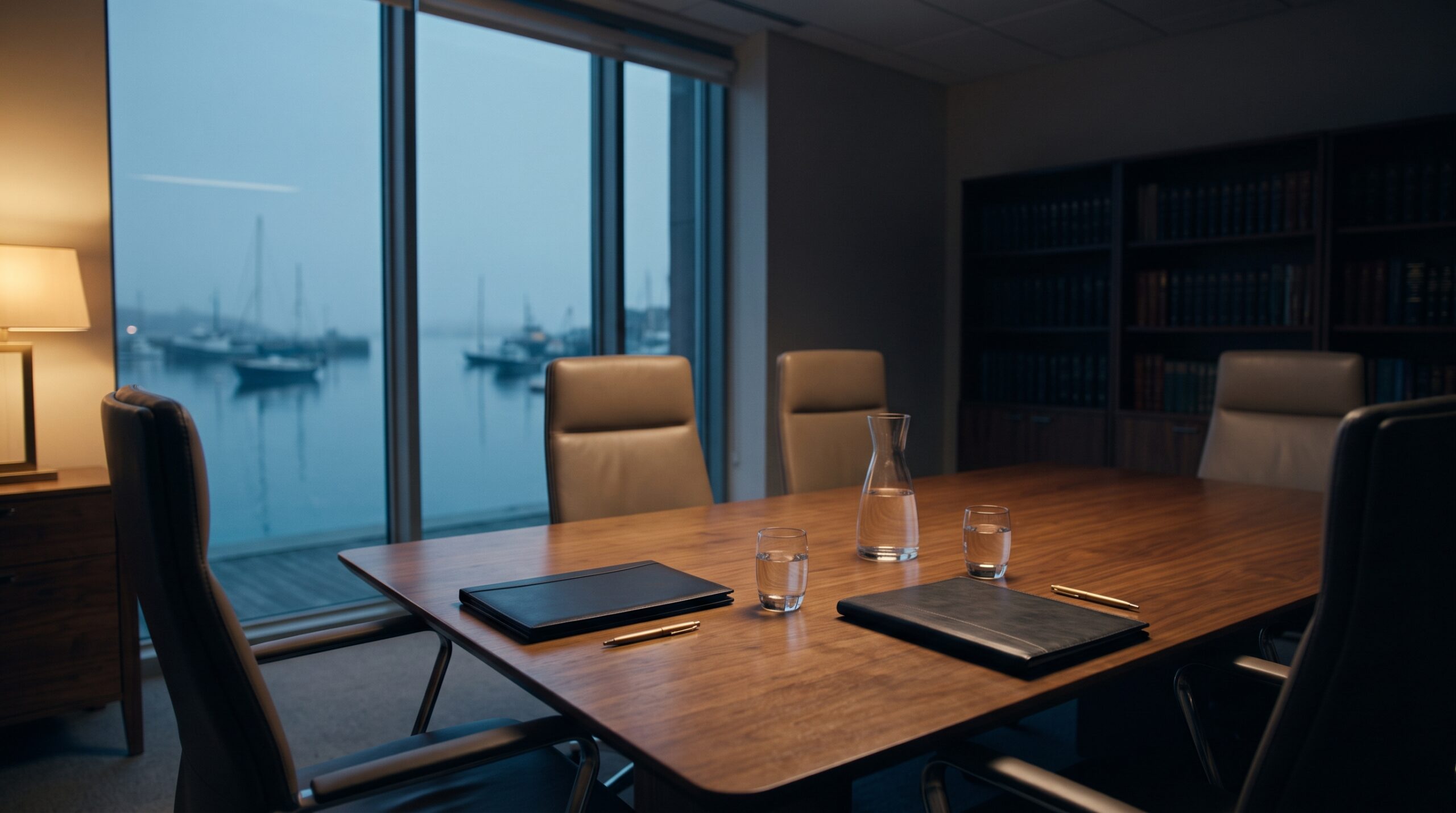
Less gets missed, because one mediator reads the numbers while the other reads the room, so a single neutral’s blind spot doesn’t decide your day.
What the room actually feels like.
Forget the courtroom you’re picturing. There’s no gallery, no witness stand, no robe, no one calling your matter out loud in front of strangers.
It’s a quiet room with good light and a door that closes. Coffee, probably.
A table. Two people whose entire job that day is to help you reach the end, and who’ve done this many times before.
You won’t be ambushed. Nobody is there to trap you into saying the wrong thing.
If you need a minute, you take a minute. If you need to step out and call your attorney, you step out.
If the morning gets heavy, and sometimes it does, the two mediators are there to steady the room, not to push you through it.
Most people arrive braced for a fight and are surprised, somewhere around midday, to notice the fight has gone quiet. Not because anyone surrendered.
Because for the first time, the real problem is sitting on the table in plain view, with enough people in the room to actually hold it. That’s the part you can’t feel from the outside.
It’s why we wrote this page, so you’d know, before you ever pick up the phone, that the thing you’re dreading isn’t the thing that happens here.
What belongs in this room, and what doesn’t.
Mediation isn’t the answer to everything, and we’ll tell you straight if your matter isn’t a fit. Here’s the honest line.
Matters we handle
- Business and partnership disputes
- Employment and workplace conflicts
- Estate and family-business matters
- Contract and commercial disagreements
- General civil disputes across Orange County
Not the right fit
- Divorce mediation, which we don’t handle
- Matters that need an immediate court order
- Situations involving safety concerns or abuse
- Anyone looking to punish rather than resolve
We serve Orange County and the surrounding Southern California region, including Irvine, Newport Beach, and the broader Inland Empire, by appointment from our Irvine office.
Answered honestly.
How is two-mediator (dyadic) mediation different from regular mediation?
In most mediations a single neutral runs everything and shuttles between rooms, which means one set of eyes, one read on the room, and real pressure to force a number before the day runs out. Dyadic mediation puts two experienced neutrals in the process together. One can track the numbers while the other reads the people. One can sit with each side while the other holds the center. Less gets missed, and the balance in the room stays even.
Is mediation legally binding?
The conversation itself isn’t binding. A written agreement the parties sign at the end can be made binding and enforceable, which is why we put it in plain language and recommend legal review before anyone signs. This is general information, not legal advice.
What if we can’t reach an agreement?
You’re never forced to settle. If no agreement is reached, you keep every option you walked in with, including litigation. Even then, most people leave with the real issues narrowed and better understood, which tends to make whatever comes next shorter and less expensive.
Do I need a lawyer to mediate?
No, and many people mediate without counsel. You’re always welcome to bring your attorney, and we recommend legal review of any agreement before you sign it. You can step out to speak with your own lawyer privately at any point in the day.
How long does mediation take?
Many matters are resolved in a single day. More complex disputes can take more than one session. The whole point is to reach the end far sooner than litigation, not to stretch it out.
Is everything we say confidential?
Yes. Mediation is confidential by law in California, protected under the state’s Evidence Code. With narrow exceptions, what’s said in the room can’t be used later in court, and it stays private unless every party agrees in writing to waive it.
What kinds of disputes do you handle?
Business and partnership disputes, employment and workplace matters, estate and family-business conflicts, and general civil disputes across Orange County and Southern California. We don’t handle divorce mediation.
What if the other side isn’t sure they want to mediate?
That’s common, and it’s often where we start. Many people reach out before the other side has agreed to anything. The private intake call is a no-obligation way to understand your options, and we can help you think through how to raise mediation with the other party.

Ready to take the first step?
The intake conversation is private and carries no obligation. Tell us a little about the matter, and we’ll walk you through exactly what your path would look like.